

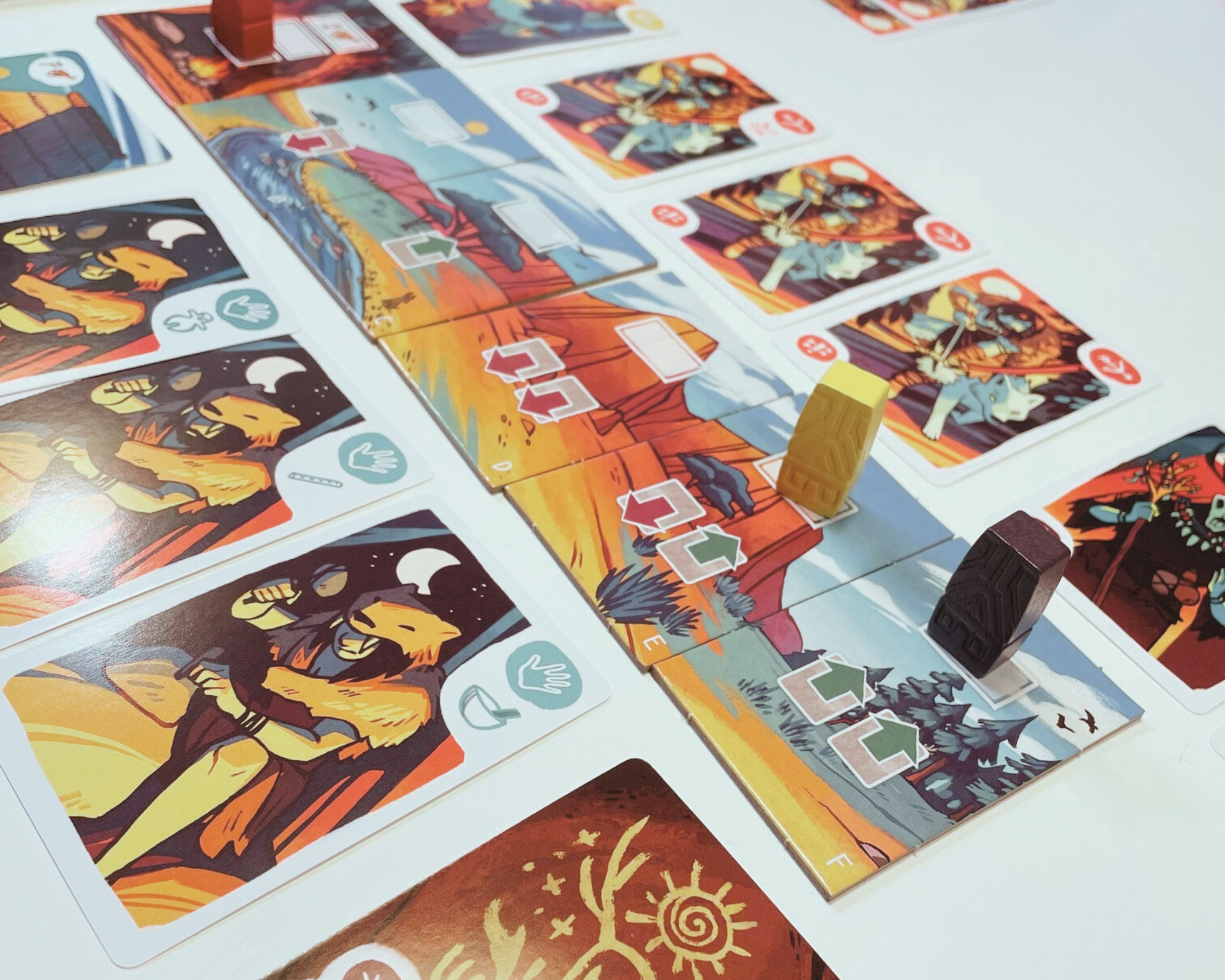
Mesos — a game where humans pretend they’re noble tribal leaders guiding their “people” through the dawn of civilization. Bah! It’s just you soft-skinned fools playing with fancy cards about hunting, gathering, and building huts while forgetting which end of the spear is pointy.
In this game, each of you commands a tribe of barely-evolved chatterboxes, placing your shiny Totem pawn on the Offer track to grab cards from rows of “Characters” or “Buildings.” Oh yes, what a mighty leader you are — picking between a hunter, shaman or a builder. That’s not leadership; that’s card shopping!
You’ll grow your tribe by recruiting these Characters, hoping they’ll feed themselves before they starve. Hunters fetch food and prestige when they’re not tripping on their own spears. Gatherers lighten your food bill because heaven forbid humans play a game where they don’t eat every two minutes. Builders, at least, know how to hammer wood instead of their thumbs — they make your future buildings cheaper, though you’ll still complain about paying for them. Then there are Shamans, babbling about “spirits” during rituals that just end with some tribes gaining prestige while others lose it. Magic? Bah. Sounds like organized guessing.
And of course, you’ve got Inventors and Artists, because even in the Stone Age humans were obsessed with showing off. Inventors multiply your points if you hoard enough fancy icons, while Artists smear mud on walls and expect applause. “Look, I painted a bison!” Splendid, Krizbella — now it’s raining and your masterpiece looks like stew. She calls it “primitive expression.” I call it wasted effort.
Every round, you put down your Totem, act in order from left to right, take your tribe cards, maybe build something if you remembered to stockpile food, then move your Totem back to the Turn Order track like a good little chief. You’ll even pay food to the great cosmic nothingness to keep your tribe alive. Forget one meal and you lose Prestige Points — because apparently famine offends the gods of scoring.
There are Events too, each one an excuse for chaos. The Hunt feeds you and fattens your score, the Shamanic Ritual punishes whoever prayed to the wrong stick, the Cave Paintings remind you that art still doesn’t feed anyone, and Sustenance — ah yes, the big one — forces you to pay food for every mouth in your tribe. Every single round someone forgets this, and then cries when they lose points. Probably Krizbella again, too busy admiring her Shamanic majority to notice her tribe’s starving.
You’ll crawl through three Eras, each one more complicated and smug than the last, revealing stronger buildings and fancier Characters. By the end, your tribe is supposedly flourishing — which in goblin terms means they haven’t burned down their huts or eaten each other. Then comes final scoring, where you count your Hunters, Builders, and Artists like precious trophies, stacking points for how “civilized” you’ve become. If there’s a tie, whoever hoarded the most food wins. Typical humans — even victory depends on your stomach.
Final Verdict
Mesos is a clever little engine of prehistoric panic — juggling food, prestige, and tribe-building in a way that almost makes me forget how much I hate your smug, tool-wielding faces. The Offer track tension and event timing are sharp enough to draw blood, and I’ll grudgingly admit the game actually rewards good planning instead of luck. Still, it’s all dressed up in the same old human vanity — “Look, we’ve evolved!” Ha! You haven’t.
Jugbite’s Rating: 8 cabbages out of 10.
A fine bit of early-human nonsense: tense, strategic, and full of chances to watch Krizbella’s tribe collapse in famine. Play it if you like counting food and pretending it’s history — I’ll be in the swamp, inventing fire the proper way: with rage.
 Krizbella